

The roots of horse racing date back to the Roman Empire in around 200AD. Moving forward, King Charles II’s love affair with Newmarket began in the 1600s and coined the phrase “The Sport of Kings”. National Hunt racing arrived later, with a race between St. John’s Church steeple to St. Mary’s Church steeple in 1752 leading to the term steeplechasing.
Fast forward to the 21st century and Newmarket remains the centre of Flat racing, while steeplechases continue to captivate jumps fans – albeit now held on actual racecourses.
Turning to the individual races, many events have come and gone. Others have stood the test of time. Here, we highlight the oldest events of them all – those contests that race on centuries after they first went under starters’ orders.
Kiplingcotes Derby (est. 1519) – The Oldest Race in the World
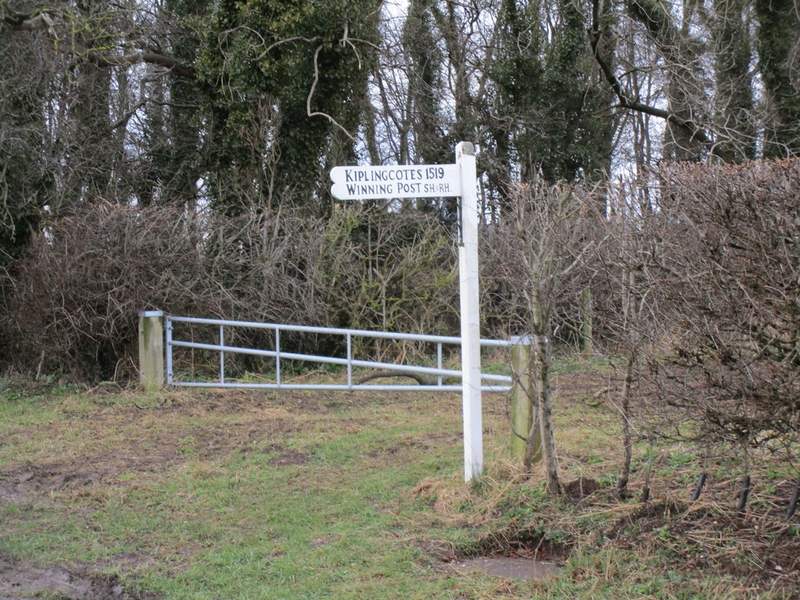
Established in 1519, this East Yorkshire event is traditionally held on the third Thursday in March. Beginning during the reign of King Henry VIII, the historic contest has continued through the age of exploration, the industrial revolution, and two World Wars.
The stamina-sapping event starts at the old Kiplingcotes railway station and ends 4.5 miles away at Londesborough Wold Farm. The “course” largely consists of a grassy verge by the roadside. However, it is at least a well-maintained grassy verge, thanks to the efforts of a clerk of the course, who receives the princely sum of 25p per year for his services.
The entry fee for the race is £5, with a fixed £50 prize going to the winner. The second-place finisher receives the remainder of the entry fees. As such, whenever there are 21 or more entries, the horse that finishes second is awarded a bigger prize than the winner.
One of the main reasons this race has endured for so long is a peculiarity of the rules. According to the Kiplingcotes Derby rulebook, if the race misses a single year, it must never take place again. Credit goes to the Kiplingcotes locals for maintaining the tradition, whatever the circumstances. In particularly challenging years, the race has consisted of one man and his horse trudging through snow drifts or monsoon-like conditions.
The Carlisle Bell (est. 1599) – The Oldest Sporting Trophy in the World
Opened in 1539, Chester Racecourse is the oldest racecourse still in operation in both Britain and indeed the world. However, the track’s longest-running race of the Chester Cup is relatively youthful, having made its debut in 1824.
To find Britain’s oldest race held on a recognised racecourse, we need to look further north. Located in the village of Blackwell, Carlisle Racecourse stages both Flat and National Hunt racing. While the course opened at its current venue in 1904, its most famous race dates back to the reign of Elizabeth I.
Making its debut in 1599 at a venue known as The Swifts, the 7f 134y Carlisle Bell has served as the centrepiece of the Carlisle racing season for over 400 years. The “Bell” refers to a pair of bells awarded to the winner, widely recognised as the oldest sporting trophy in the world.
The larger of the two bells bears an inscription reading, “The sweftes horse thes bel to tak for mi lade Daker sake”, which no doubt made sense back in the 1600s but, for modern readers, translates to, “The swiftest horse this bell to take for my Lady Dacre’s sake.” Lady Dacre being the member of the aristocracy who donated the bells to the track. Each year, the bells are ceremoniously awarded to the winner of the Carlisle Bell, before being taken back to Carlisle Guildhall Museum for safekeeping.
The Lanark Silver Bell (est. 1628) – Scotland’s Oldest Race
If legend were to be believed, this Scottish contest would be the oldest of them all. However, the tale that the Silver Bell began following an 1160 gift from William the Lion appears to be no more than a myth.
While not dating back to the 12th century, the Lanark Silver Bell is still historic, with the first winner inscribed on the Silver Bell Trophy in 1628. Taking its name from its former home at Lanark Racecourse, the Silver Bell disappeared upon the track’s closure in 1977.
After a 31-year hiatus, the Lanark Silver Bell was revived at Hamilton Racecourse in 2008. The popular 1m4f handicap now takes place in August each year.
Palio Di Siena (est. 1633) – Honour on the Line in Tuscany
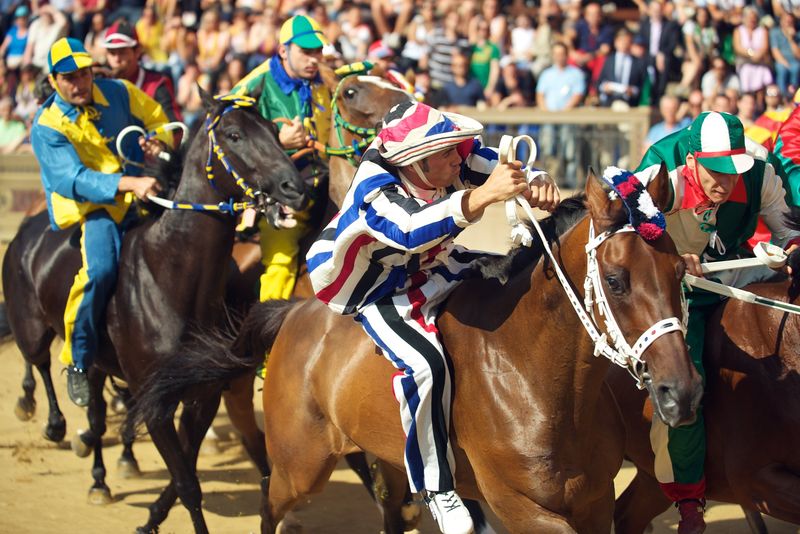
Boasting roots in medieval times, the “modern” version of the Palio di Siena first took place in 1633. The race represents a historic battle between the city’s 17 districts, or contrade, each with its own flag and colours.
Siena’s Piazza del Campo sets the stage on 2 July and 16 August each year, with 10 contrade selected to compete. Horses are allocated via a lottery system, while the brave jockeys forgo saddles to race bareback around the town square. Three laps and around 90 seconds later, the winner is crowned to the delight of the massed crowds.
A racing spectacle unlike any other, few events combine local rivalry and medieval pageantry quite like the Palio di Siena. The race is also possibly the only event in which a horse crossing the line without their rider can still be named the winner.
Newmarket Town Plate (est. 1666) – The Race for the Sausages
Known as the headquarters of Flat racing, Newmarket is home to one of the world’s most historic events. The Newmarket Town Plate was established in 1666 by King Charles II, whose love of the race no doubt increased when riding the winner in 1671. His mount that day needed no other name than “His Majesty’s Horse.”
The racing-loving monarch helped draft the initial rules. These included “Every rider that layeth hold on, or striketh any of the riders, shall win no plate or prize” and a stipulation that the race must be run “forever”. How many riders have been disqualified due to fisticuffs with their fellow jockeys remains unreported, but the race organisers have done a sterling job fulfilling the “forever” part of the rule book.
The Town Plate has taken place every year since 1666, except during the Second World War and in 2020. Rather than the famous Rowley Mile or July Course, the 3m6f Town Plate is the only race of the year held on the lesser-spotted Newmarket Round Course.
A resolutely amateur affair, the winner receives a silver photograph frame, a £125 voucher from Goldings of Newmarket and, best of all, a box of Powters Celebrated Newmarket Sausages. Tasty!
Honourable Mentions
- St Leger Stakes – The original Classic made its debut in 1776, three years before the Epsom Oaks in 1779. Whilst the oldest Classic, the St Leger is not the oldest event held at Doncaster. That honour belongs to the Doncaster Cup, which was first run in 1766
- Phoenix Stakes – Not to be confused with the Irish event of the same name. This 6f sprint is the oldest race in America, having first appeared at Keeneland in 1831
- Grand Annual Chase – The oldest race at the Cheltenham Festival is also Britain’s oldest chase. First run in 1834, the 2m event predates the National Hunt Chase by 26 years and the Cheltenham Gold Cup by 90 years